
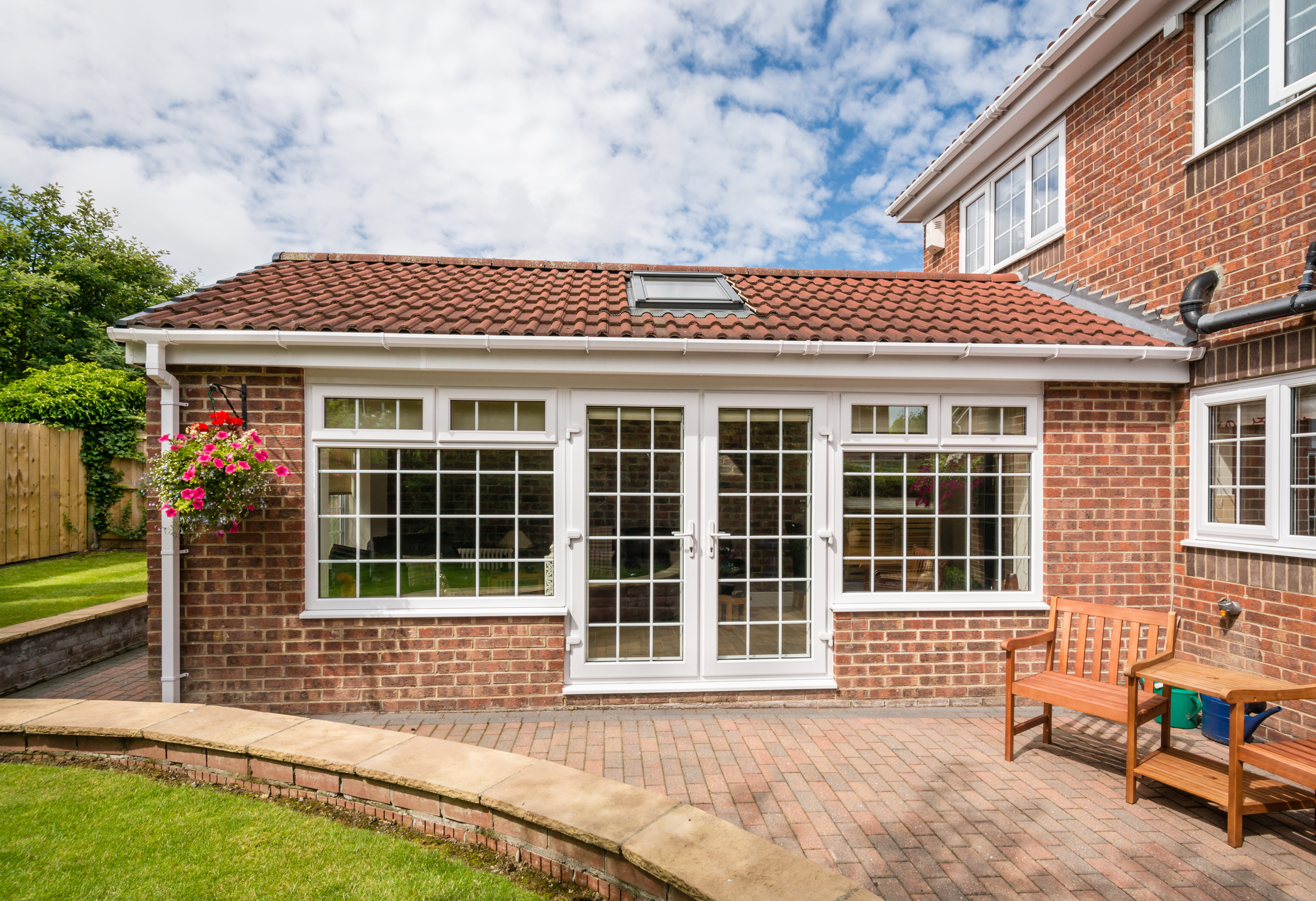
If you’ve ever sat in your conservatory on a bright August evening and thought it was the best room in the house, and then avoided it completely by November, you’re not alone. It’s a common problem. The typical solution is to extend the central heating pipework into the conservatory, which is expensive, disruptive, and often impractical for a room with mostly glass and limited wall space.
So what’s the alternative? Slimline electric radiators — no pipework, no boiler upgrade, installed in a day. We fit slimline electric radiators into conservatories across Dundee and the wider Tayside area, and it’s one of the most common upgrades homeowners ask us about.
Here’s why plumbing isn’t the quick fix people assume it is, and how you can keep a conservatory comfortable in every season without lifting a single floorboard.
Why conservatories are hard to heat
Glass and thin roof
Large glazed areas lose heat fast. Glass and thin polycarbonate roofing have far less insulating value than brick and plaster, so heat that would normally stay put in a room escapes almost as fast as you can produce it.
And that’s before you factor in the sheer amount of glazed area compared to solid wall, which leaves the room short on where you’d even put a traditional radiator.
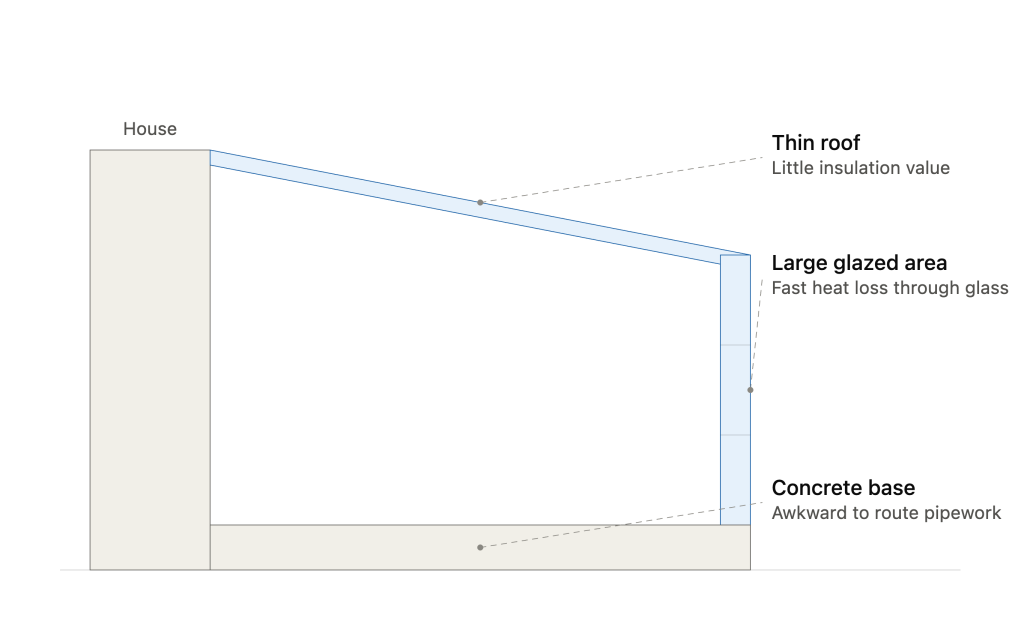
Solid concrete base
Most conservatories sit on a separate concrete slab, built after the main house and often without any provision for running pipework through it. Getting a wet central heating system into that room usually means breaking into floors, chasing walls, or running pipe runs externally and boxing them in, none of which is straightforward once the room already exists.
Why extension plumbing isn’t the easy fix
In theory, adding a couple of radiators to your existing system sounds simple. But in practice, conservatories are exactly the kind of room where it gets complicated, for example:
- Cost: The expense of digging/lifting floors, running pipework under or through the conservatory base
- Disruption: Builders, mess, potentially weeks of work
- Viability: for a new-build conservatory especially, plumbing is often not even physically viable without major groundwork
- Building regulations: the room may need to meet the same energy performance standards as the rest of the house under the Scottish Building Standards, which is a much higher bar for a mostly-glazed structure to meet than it would face as an exempt conservatory
- Boiler size: extending a wet system can mean you need to upgrade your boiler to an oversized or upgraded boiler just for one room
The alternative: Slimline electric radiators
This is where electric heating earns its reputation as central heating without the pipes. A slimline electric radiator doesn’t connect to your boiler or your central heating system at all. It simply plugs into a standard socket or is wired to a fused spur, and it’s ready to use.
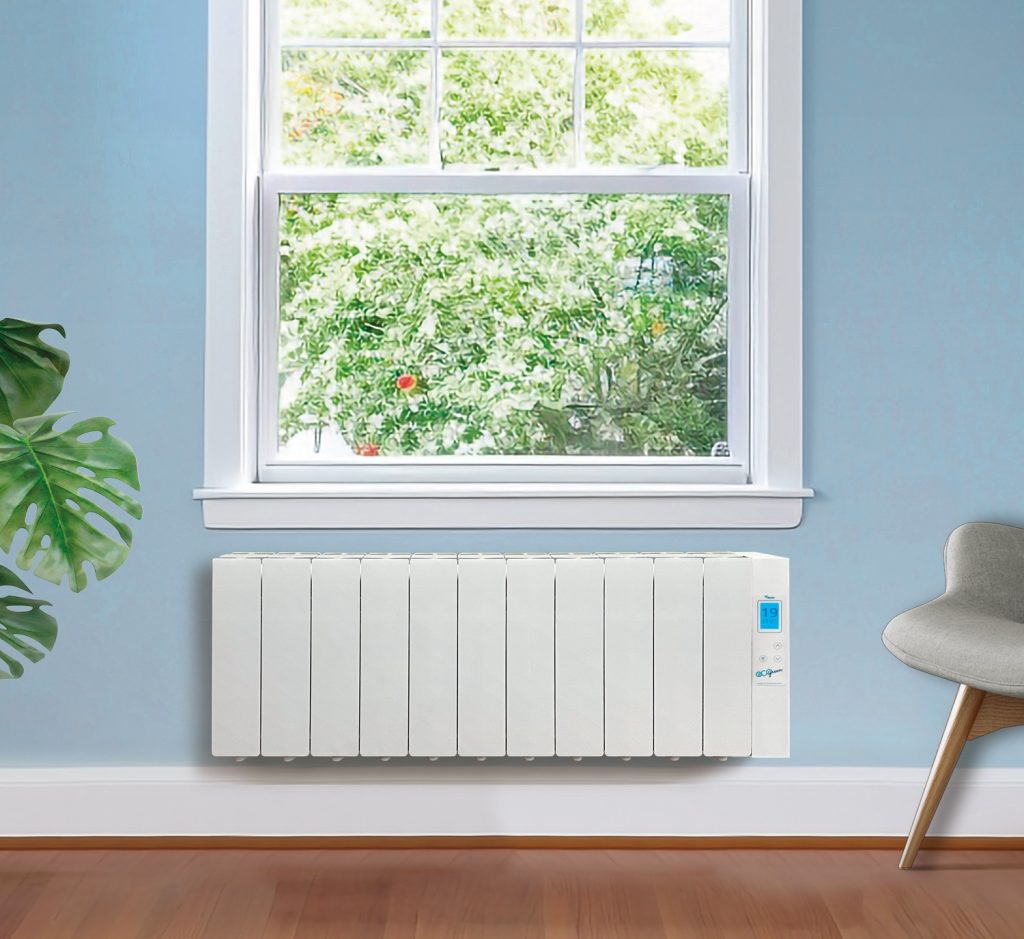
Low profile shape, ideal for awkward spaces
The slimline part matters more in a conservatory than almost anywhere else in the house. Wall space is usually limited to the strip beneath the windows or the one solid wall shared with the house, and sill heights are often lower than in a standard room. A slim, low-profile radiator fits into that awkward space without eating into the light and openness that made you want a conservatory in the first place.
Independent heating controls
Because each electric radiator is independently controlled, you’re only ever heating the room when you’re actually using it, rather than running a whole zone of your wet system to bring one radiator up to temperature.
Fast, easy installation
There’s no pipework involved with electric heating, so a typical installation takes a matter of hours rather than days, with none of the mess that comes with lifting floors or channelling walls. That also makes it the more realistic option if you’re heating a conservatory that’s already built and decorated, since there’s nothing to disturb.
Flexibility
Electric heating can be added later if a conservatory already exists, without disturbing existing decor or flooring.
Heat control matched to a conservatory’s temperature extremes
Conservatories swing between temperatures faster than any other room in the house, which makes accurate, responsive control genuinely useful rather than a nice extra. Electric radiators with thermostatic control respond quickly to those swings, rather than lagging behind the way a wet system often does.
Our radiators can be programmed or controlled by app, so you can set the conservatory to warm up before you sit down for breakfast, or in the evening when you tend to use it most, and drop back down the rest of the time.
Over the course of a year, that means the room can go from a summer sun trap to a properly usable space right through winter, without you paying to heat it around the clock.
Practical buying considerations
- Sizing: Because conservatories lose heat faster than other rooms, it’s worth working out the wattage you actually need rather than guessing. Our heating wattage calculator will give you a proper starting point based on the room’s dimensions and glazing.
- Positioning: Look at where your solid wall space is and where sill heights leave room beneath the windows. Slimline models are designed to work with exactly this kind of restricted space.
- Style: A conservatory is meant to feel light and open, so a bulky traditional radiator can dominate the room in a way it wouldn’t elsewhere in the house. Slimline designs are available in finishes like white and anthracite, so the heating disappears into the room rather than becoming the focal point.
Find the right electric heating solution for your conservatory
Here are some example slimline and vertical electric radiators that are ideal for conversatories:
If you need a reliable electric heating technician in Dundee and the surrounding areas, please get in touch and we will be happy to supply and install your new electric raditor in your conservatory at a time that suits you.
And if you’re also looking for heating solutions for your outbuildings, then check out our article on Electric heating for garden rooms, sheds, and garages.